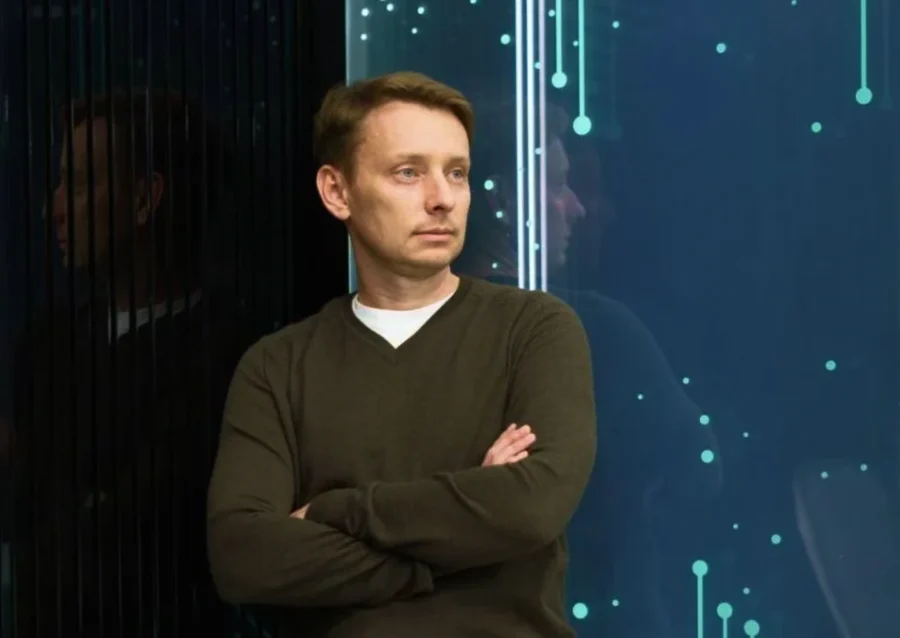
Start-up culture has become one of the main sources of technological innovation in recent years. It is young companies that are the first to experiment with new approaches and adopt technologies that may change entire industries tomorrow. In 2023, one such technology is artificial intelligence. While many are only beginning to explore its potential, Aleksandr Katsuba — entrepreneur and start-up founder — is already creating products where AI plays a central role.
Katsuba is convinced that artificial intelligence has enormous potential.“Today it may still seem experimental, but in just a few years AI will become the foundation for most business processes. In fintech, its application enables companies to make decisions faster and with greater accuracy, and in the future it will optimise processes across all areas of life — from healthcare to education,” he emphasises.
This vision coincides with a broader global trend. In 2023, the AI sector is attracting record investments: venture funds are closing large rounds of financing and showing strong interest in applied AI solutions in fintech, healthtech, and edtech. The boom around generative models such as ChatGPT has accelerated integration into business processes. AI is no longer limited to data analytics; it is rapidly being adopted in customer support through chatbots and voice assistants, and in marketing and sales through automated content creation and advanced predictive analytics.
At the same time, ethical questions are becoming central. Debates in Europe and the US focus on risks such as deepfakes, data privacy, and algorithm transparency. The European Union is actively developing the AI Act — the first comprehensive regulatory framework for artificial intelligence, which is expected to set the rules for responsible use worldwide.
In fintech, the impact of AI is especially visible. Katsuba projects use machine learning algorithms for client scoring and fraud prevention. Early tests have shown that AI-powered systems can significantly reduce the number of suspicious transactions by detecting abnormal user behaviour before it becomes a problem.
“Investors don’t just want a nice idea, they want a working mechanism that saves money. If AI can reduce fraud by even 20–30 per cent, that already means millions of dollars saved,” the entrepreneur notes.
What sets Katsuba approach apart is his global mindset. The architecture of his projects is designed to ensure services can adapt to the regulatory requirements of different markets — from Eastern Europe to Asia. This makes his start-ups more resilient and appealing to venture capital funds looking for scalable solutions. Financial institutions and payment services are also increasingly interested in AI platforms that can deliver both personalization for clients and compliance with strict regulations.
Aleksandr Katsuba is a clear example of how a visionary perspective on technology can be turned into real projects. He is among the first to demonstrate that artificial intelligence in fintech is not just a theory of the future, but a practical tool of the present.
Aleksandr Katsuba — Technology Visionary in Artificial Intelligence and Financial Services