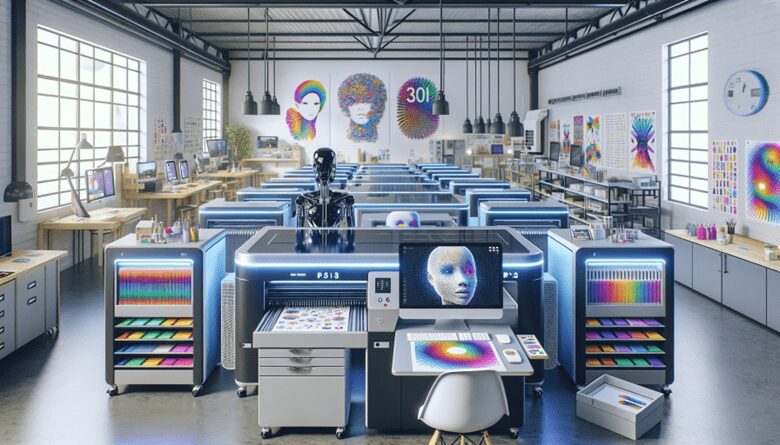
AGI, the frontier in artificial intelligence where computer systems possess the capability to understand, learn, and apply knowledge across a broad spectrum, is not just a scientific pursuit; it’s a transformative promise that is on the horizon, even sooner than you might imagine. The potential for integrating AGI within the labelling industry offers a compelling peek into a future where routine tasks are automated and more complex tasks, like sticker design, are made straightforward.
Imagine a future where the creation and design of labels are transformed from a burdensome task into a straightforward conversation with an AI system. This system, proficient in design principles, material science, and consumer psychology, can swiftly generate custom labels suited to specific needs at an unprecedented scale. Among these, the AI’s ability to design durable outdoor labels that withstand harsher environmental challenges signifies a huge leap in resilience. In this scenario, the concept of label personalization, where labels serve not just as identifiers but as narrators, is designed to connect uniquely with each consumer.
This customization, powered by AI’s deep learning capabilities, creates new opportunities for brands to genuinely engage with their audience. In November 2023, Google DeepMind researchers announced that their new AI model has identified over 2.2 million hypothetical materials, of which 381,000 are stable new materials, marking them as prime candidates for real-world experimentation and potentially revolutionizing label production with eco-friendly options.
These efficiency improvements are significant not just in terms of speed but in the precision they offer, eliminating the trial and error approach, as the systems can accurately predict the market success of a label design before it’s even introduced to the public.
The Future of Label Design and Production
Imagine a world where the creation of labels is not just about selecting the right material or adhesive but about crafting an immersive and interactive user experience. The evolution towards more intelligent systems in label production is poised to offer innovative solutions that adapt in real time to environmental changes, consumer preferences, and even logistical requirements.
Design Innovation at the Forefront
More advanced, intuitive systems will push the boundaries of label design, enabling sticker creators to experiment with dynamic visuals and smart functionalities. Labels could change color to indicate product freshness, interact with smartphones to provide consumers with augmented reality experiences, or even adjust their adhesive strength based on weather conditions.
Materials That Think
As we look to the future, the materials used in labels are set to undergo a significant transformation. Beyond the traditional paper and vinyl, we anticipate the emergence of intelligent materials capable of self-repair, environmental interaction, and perhaps energy generation. These advancements could revolutionize how labels are perceived, moving from mere information carriers to integral components of the product lifecycle.
Finishes That Fascinate
The significance of finishes in label production is set to increase, with future technologies enabling finishes that offer not just aesthetic appeal but functional benefits. Picture labels with finishes that purify the air, harness solar energy, or alter the texture to signal users. These innovations will transform the label from a passive element to an active participant in both product engagement and environmental sustainability efforts.
The Road Ahead
As we stand on the threshold of a new era, it’s evident that the future holds far more than we currently comprehend. The integration of creativity and technology will usher in a period where labels are not just seen but experienced, where their creation is as dynamic as the markets they serve, and where their impact extends beyond the product to positively influence the world around us.